When the silence in that doctor’s office breaks, the emotional weight doesn't just land on the patient—it ripples instantly through the entire family. For spouses and adult children, the immediate aftermath can feel like navigating a complex maze without a map.
Fortunately, families do not have to walk this path alone. A vast, specialized network of structural, emotional, and logistical resources exists specifically to anchor care partners from day one.
1. Immediate Navigation & Crisis Support
In the early days following a diagnosis, questions often arrive at midnight. Having access to professional guidance at any hour is a critical lifeline.
The Alzheimer’s Association 24/7 Helpline (800.272.3900): Staffed around the clock by master’s-level clinicians and dementia specialists who provide confidential emotional support, crisis management, and immediate connection to local resources in over 200 languages.
The Alzheimer’s Foundation of America (AFA) Helpline (866.232.8484): Staffed by licensed social workers seven days a week, this helpline focuses heavily on caregiving techniques, practical advice, and emotional coping strategies.
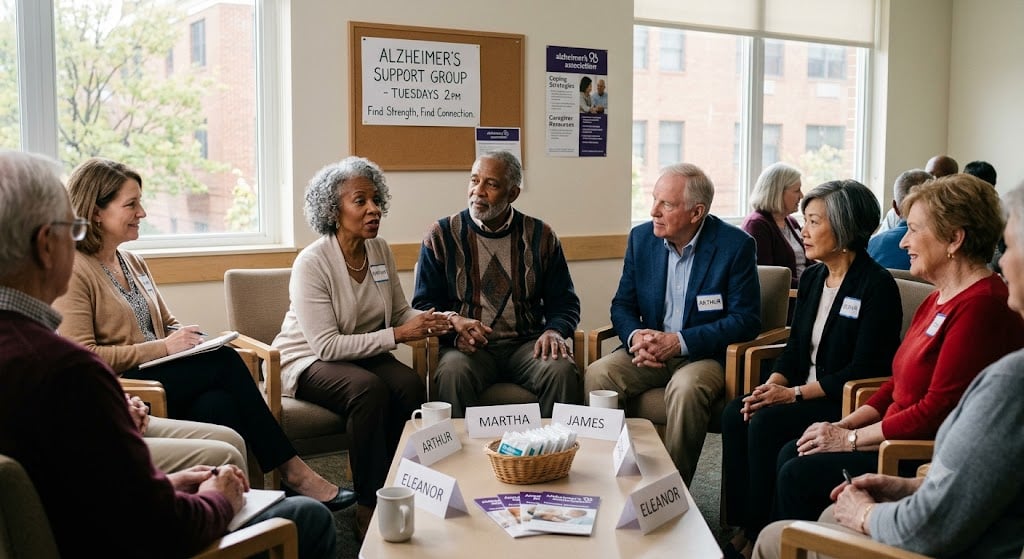
2. Specialized Peer Support Groups
Spouses and adult children face entirely different emotional landscapes, and the caregiver community has evolved to offer hyper-specific peer spaces.
For Spouses ("Caring for a Partner"): Spousal support groups focus heavily on the grief of shifting from a romantic partner to a care partner, managing the loss of shared retirement dreams, and handling changing relationship dynamics.
For Adult Children: Often referred to as the "sandwich generation," adult children frequently juggle caring for a parent while managing their own careers and families. Specialized adult-child groups provide a safe space to process the heartbreak of role reversal without judgment.
Digital Micro-Communities: For those who cannot leave the house for in-person meetings, moderated online networks like ALZConnected or vetted, private social media forums offer immediate, anonymous spaces to swap practical tips or simply vent to peers.
3. Local Logistical & Care Anchors
Navigating the logistical side of a progressive disease requires localized expertise.
Area Agencies on Aging (AAA): Every county or region has a local AAA. This public resource connects families directly to localized elder law attorneys, financial planners who specialize in Medicaid/long-term care, and local respite care grants.
The Eldercare Locator (eldercare.acl.gov): A public service of the U.S. Administration on Aging that helps families find trusted local support, home care services, and transportation assistance tailored to their specific zip code.
Memory Cafés: These are structured, worry-free social gatherings where individuals with early-to-mid-stage dementia and their care partners can enjoy a social outing together without the fear of stigma, allowing spouses to be "partners" again in a joyful environment.
4. Educational Foundations for Caregivers
Dementia requires a brand-new vocabulary and communication skillset. Understanding the mechanics of the brain prevents a lot of frustration down the road.
Dementia Care Training: Both the Alzheimer’s Association and AFA offer free, self-paced e-learning workshops covering topics like “Understanding Dementia-Related Behaviors” and “Effective Communication Strategies”. Families learn vital techniques—such as utilizing validation therapy instead of constantly correcting a loved one's reality.
The ADEAR Center ([email protected]): Run by the National Institute on Aging, this center provides free, evidence-based research papers, booklets, and updates on clinical trials for families looking for rigorous scientific clarity on the disease’s progression.
The Path Forward: Removing the stigma does not mean we minimize the grief, the frustration, or the exhausting reality that caregivers face. Rather, it means we refuse to let the disease define the entirety of a person’s existence. Putting on your own oxygen mask first isn't selfish; it's a prerequisite. Engaging with these resources early doesn't mean you are giving up on your loved one—it means you are equipping yourself with the armor needed to love, support, and connect with them well for the duration of the journey.