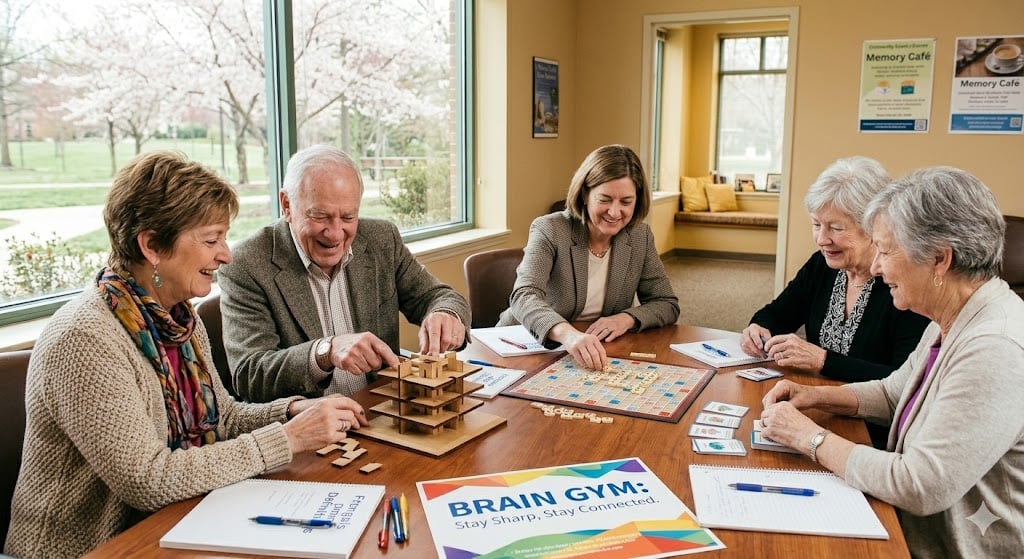
Maintaining cognitive health is one of the most impactful ways to ensure a high quality of life as we age. Just as we prioritize cardiovascular health or muscle strength, the brain requires consistent "exercise" and nutrition to maintain its plasticity—the ability to form new neural connections.
The Benefits of Cognitive Engagement
Engaging in regular brain-stimulating activities offers more than just a way to pass the time. The physiological and psychological benefits are profound:
-
Building Cognitive Reserve: Frequent mental stimulation helps build a "reserve" of neural pathways. This acts as a buffer, helping the brain function well even if it faces age-related changes.
-
Stress Reduction: Many cognitive hobbies, such as reading or crafting, induce a "flow state," which lowers cortisol levels and promotes emotional balance.
-
Neurogenesis Support: While once thought impossible, we now know the adult brain can generate new cells, particularly in the hippocampus (the area responsible for memory), when challenged with new learning.
-
Enhanced Social Connectivity: Many brain-healthy activities are communal, which combats isolation—a known risk factor for cognitive decline.
Activities for a Sharp and Resilient Mind
The key to effective brain training is variety and novelty. If an activity becomes too easy, the brain stops working as hard to complete it. Here are several ways to keep the mind engaged:
1. Mastering New Skills
The brain thrives on the challenge of the unfamiliar. Consider picking up a skill that requires both mental focus and physical coordination:
-
Learning a Language: This is one of the best ways to improve executive function.
-
Musical Instruments: Playing an instrument engages almost every area of the brain simultaneously.
-
Strategy Games: Chess, bridge, or complex board games require forward-thinking and pattern recognition.
2. Mind-Body Movement
Physical activity that requires focus—often called "moving meditation"—strengthens the connection between the mind and body.
-
Tai Chi or "Zen-Stepping": These slow, deliberate movements improve balance and spatial awareness while lowering stress.
-
Dancing: Memorizing steps and moving to a rhythm provides a significant cognitive workout.
3. Cognitive "Cross-Training"
Mix up your daily routine to force the brain out of autopilot:
-
Read Deeply: Switch between fiction (to boost empathy and imagination) and non-fiction (to learn new facts).
-
Creative Arts: Painting, woodworking, or knitting improve fine motor skills and visual-spatial reasoning.
-
Puzzles with a Twist: Move beyond crosswords to logic puzzles like Sudoku or "Escape Room" style riddles.
The Role of Nutrition: The Mediterranean Approach
What we eat directly impacts brain inflammation and blood flow. A diet rich in omega-3 fatty acids, antioxidants, and leafy greens—often modeled after Mediterranean eating patterns—is widely considered the gold standard for brain health. Key staples include:
-
Berries: High in flavonoids that may improve memory.
-
Walnuts: Excellent sources of protein and healthy fats.
-
Leafy Greens: Spinach and kale are packed with Vitamin K and lutein.
Summary
Brain health is a holistic endeavor. By combining new learning, purposeful movement, and a nutrient-dense diet, you can support a sharp, vibrant mind for years to come. Remember: it is never too late to start a new habit that challenges your perspective and strengthens your mental resilience.