The Ageless Renaissance: Why the 70+ Workforce is the Modern Economy’s Most Potent Asset
The traditional concept of retirement is undergoing a radical, irreversible transformation. For nearly a century, the age of 65 was treated as a biological and professional "expiration date"—a cliff off which workers stepped into a quiet life of leisure. But as we move through 2026, that cliff has been replaced by a bridge.
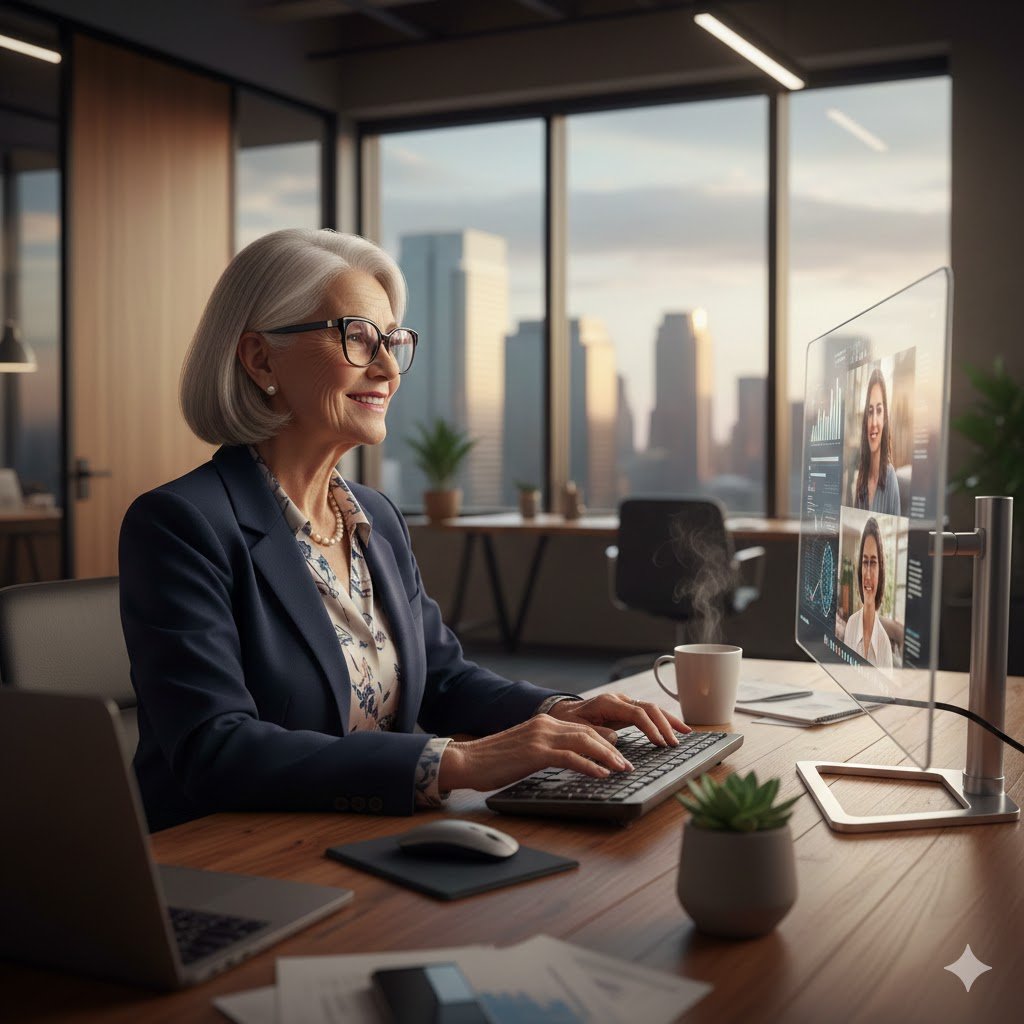
Propelled by a "Biological Bonus Round" of extended health-spans and a deep-seated desire for intellectual engagement, a new class of "Modern Elders" is choosing to stay in the workforce. They aren’t just filling seats; they are stabilizing global industries, mentoring the next generation, and proving that the "Wisdom Dividend" is the most undervalued currency in the modern market.
I. The Biological Revolution: Health-Span vs. Life-Span
The primary catalyst for this shift is the closing gap between life-span (how long we live) and health-span (how long we live in good health). In previous generations, a 70-year-old was often physically spent. Today, thanks to personalized nutrition, regenerative medicine, and the widespread adoption of "Active Aging" protocols, the 70-year-old of 2026 often possesses the cardiovascular health and cognitive clarity of a 50-year-old from the 1980s.
The "Neuro-Gym" Effect
For these individuals, work isn't a chore—it’s a longevity strategy. Neurological research indicates that the workplace provides three essential ingredients for a healthy brain:
-
Novelty: Dealing with new market trends or software updates keeps the brain’s plastic pathways open.
-
Complex Problem Solving: Navigating a high-stakes deal or a logistical bottleneck serves as a "stress test" for cognitive function, delaying the onset of age-related decline.
-
Social Synchronicity: The "Blue Zones" research consistently shows that social integration is the #1 predictor of longevity. The office provides a consistent, multi-generational social fabric that retirement often shreds.
II. The Wisdom Dividend: Navigating the "Perma-Crisis"
In an era of rapid technological disruption and "perma-crisis" (constant economic and geopolitical shifts), the experience of a 70+ professional is a stabilizing force. Companies are realizing that while younger workers are masters of linear speed, older workers are masters of non-linear pattern recognition.
1. Contextual Intelligence
An employee who has seen the rise and fall of interest rates over four decades doesn't panic when the market shifts. They possess a "historical database" in their mind that allows them to say, "This looks like 1994, but with the speed of 2008—here is the pivot we need." This ability to synthesize decades of data into a single intuitive "gut feeling" is something AI still struggles to replicate.
2. The Mastery of "Soft Power"
In a 2026 workforce dominated by digital communication, the "human" skills of the 70+ cohort have become a premium luxury.
-
The Art of De-escalation: Younger generations, raised in the high-friction environment of social media, often struggle with face-to-face conflict. The Modern Elder, having survived decades of boardroom battles, knows how to lower the temperature of a room with a single sentence.
-
Ethical Anchoring: Older workers often act as the "moral compass" of a firm. With less pressure to "climb the ladder," they are more willing to speak truth to power and ensure that long-term reputation isn't sacrificed for short-term gains.
III. The Mentorship Synergy: Building the "Intergenerational Loop"
The most significant value these professionals provide is their role as The Great Accelerators for younger talent. We are seeing a move away from "Seniority-based" hierarchies toward "Skill-sharing" ecosystems.
The "Calming Anchor" for Gen Z and Gen Alpha
Younger workers today face unprecedented levels of workplace anxiety and burnout. Having a 75-year-old mentor provides a vital perspective. When a 22-year-old feels like a missed deadline is the end of the world, the mentor provides the perspective that only time can buy: "I’ve seen bigger mistakes than this fixed in an afternoon. Let’s sit down and map it out."
The Rise of "Reverse Mentoring"
The beauty of the 2026 workplace is the Two-Way Street.
-
The Elder provides the "Why" (strategy, ethics, and relationships).
-
The Youth provides the "How" (AI integration, digital trends, and rapid iteration).
This symbiosis creates a "Super-Employee" effect where the wisdom of the old and the energy of the young are fused, making the entire organization more resilient.
IV. The New "Work-tirement" Model
To accommodate this vital demographic, the corporate world is rewriting the HR handbook. The "All or Nothing" approach to employment is being replaced by Fluid Career Paths:
| The "Legacy" Roles of 2026 | Description |
| Fractional Executives | Highly experienced leaders who work 2 days a week for 3 different startups. |
| In-House Sages | Former VPs who return specifically to mentor the "high-potential" track. |
| Project-Based Consultants | Subject matter experts brought in only for high-stakes "Red Teaming." |
| Institutional Archivists | Keeping the "soul" of the company alive by teaching its history and values. |
V. Conclusion: The Future is Age-Agnostic
The "Silver Tsunami" was once described as a looming economic disaster—a burden on healthcare and pension systems. In 2026, we see it for what it truly is: a Silver Renaissance.
By staying healthy and staying employed, people in their 70s are not just "holding on" to their jobs; they are redefining what it means to be a contributor to society. They are proving that the peak of human productivity isn't a single point in our 40s, but a plateau that can extend well into our 80s if we have the health to support it and the wisdom to share it.
The best companies of the future won't be the ones with the youngest teams, but the ones with the most diverse age-spread, leveraging the raw energy of youth and the refined, battle-tested wisdom of the 70+ professional.