Is your older Potomac home worth more as a pristine lot than as a renovation project? You are not alone in asking. High-end buyers today often prefer turnkey layouts, resort-style amenities, and energy performance that are hard to achieve with piecemeal updates. In this guide, you will learn why tear-downs are gaining momentum in Potomac, how the permits and numbers work, what luxury buyers expect now, and practical steps to decide your next move. Let’s dive in.
Why teardowns are rising in Potomac
Luxury buyers in the region increasingly choose time certainty over long remodels. Local reporting shows that even very large, dated estates are sometimes viewed primarily for their land by buyers who want modern amenities and a clean slate. As one high-profile example, coverage of marquee Potomac and nearby estates highlights how ultra-high-end buyers evaluate lots and replacement options rather than long restorations for idiosyncratic properties. You can see that preference in action in recent reporting on large area estates and turnkey expectations from affluent buyers (Washington Post).
At the same time, the core Potomac single-family market has a typical median around the low-to-mid seven figures, while new luxury builds in Montgomery County often sell at a meaningful premium per square foot. In many neighborhoods, recently built custom homes trade in the $400 to $500-plus per square foot band. That pricing gap is central to teardown economics. When the market rewards new construction at a higher level than modernized older stock, well-located lots become the value engine.
Bottom line: if your home is dated and sits on a prime lot, the market may value the land and the ability to build new as much as, or more than, the existing structure.
What this means for your sale
If you own a dated property in a great location, you have three main paths:
- Sell as a turn-key listing after targeted updates that deliver the best return on investment.
- Sell “as-is” to a builder or end buyer who wants to replace the home.
- Partner with a builder to deliver a finished new home and capture a portion of the end value.
Each approach depends on local new-build comps, your timeline, carrying costs, and your appetite for complexity. The smartest first step is to separate land value from improvement value, then compare the net outcome of each path with a conservative pro forma.
Permits and rules that shape projects
Demolition permit basics
Montgomery County requires a residential demolition permit if a building will be razed or if less than one-third of the first-story exterior walls remain. There is a 10-day notification period before issuance. Applicants must post the demolition notice, comply with inspection and recycling or disposal requirements, and post a bond. Depending on scope, related approvals such as sediment control, grading, stormwater, and Right-of-Way permits may apply. Review the county’s current process and requirements on the Department of Permitting Services site (Montgomery County DPS demolition permits).
In practical terms, plan for a few weeks to a couple of months for demolition permitting, plus the mandatory 10-day notice. Larger site disturbances that trigger stormwater or grading reviews can add weeks or months.
Zoning and overlays
Residential zoning categories such as R-200, R-90, and R-60 set minimum lot sizes and regulate what you can build. For example, R-200 lots are typically 20,000 square feet minimum, which influences allowable footprints and setbacks. Overlay districts, Neighborhood Conservation Districts, and historic-area rules can add design review and scale limits that affect what is feasible and how long approvals take. For a high-level overview of residential zoning and lot-size minimums, see the county’s legislative analysis resources (Montgomery County OLO report).
Environmental and special constraints
Lots near the Potomac River or the C&O Canal corridor can face added scrutiny for tree conservation, steep slopes, and riparian buffers. In high-profile situations, tree retention and park-adjacent concerns have influenced what could be built and when. Planning materials also discuss how Neighborhood Conservation Districts and historic tools can slow or reshape replacement projects, especially in older neighborhoods with distinct character (Montgomery Planning guidance on teardowns).
If you want to explore demolition permit data by area, the county’s GIS maps and open data can help you see where teardowns are occurring locally (DPS permit GIS maps).
The teardown math in plain English
Budget buckets to expect
- Demolition. Industry guides show typical U.S. residential teardowns often running from roughly $10,000 to $40,000 for many suburban homes. Site complexity, access, size, and any hazardous material abatement can increase costs, so build in contingency for asbestos or lead remediation (demolition cost overview).
- Construction. In Montgomery County, luxury finished homes commonly transact around the $400 to $500-plus per square foot range, depending on location and finish level. Actual hard costs vary widely by builder and specification.
- Soft and carrying costs. Design and engineering, permits and impact fees, utility work, stormwater or forest mitigation, inspections, financing, taxes, insurance, and contingency commonly add a significant percentage to hard construction costs.
A quick rule-of-thumb comparison
Consider a simple illustration. If buyers in your micro-neighborhood pay about $450 per square foot for new luxury product, a 6,000-square-foot finished home might sell near $2.7 million. If your new-build hard and soft costs total $300 to $500 per square foot, the project cost would fall roughly between $1.8 million and $3.0 million, before factoring in demolition and site mitigation. Whether a teardown makes sense depends on three variables: what a finished new home can actually sell for on your street, your true all-in build and soft costs, and your tolerance for time and complexity.
Use recent completed new-home sales, not just active listings, to set realistic revenue assumptions. Then run a conservative pro forma that includes time, carrying costs, and a contingency for surprises.
When a renovation can win
Renovation can outperform a teardown when the existing layout is adaptable, structural systems are sound, and targeted updates can deliver the open living, kitchen, bath, and outdoor features buyers expect. Renovation may also be the better path if your lot sits in a conservation or historic context where new build massing will face added review. If your neighborhood market does not support $400-plus per square foot for new homes, a well-executed renovation may deliver a stronger net.
What luxury buyers want now
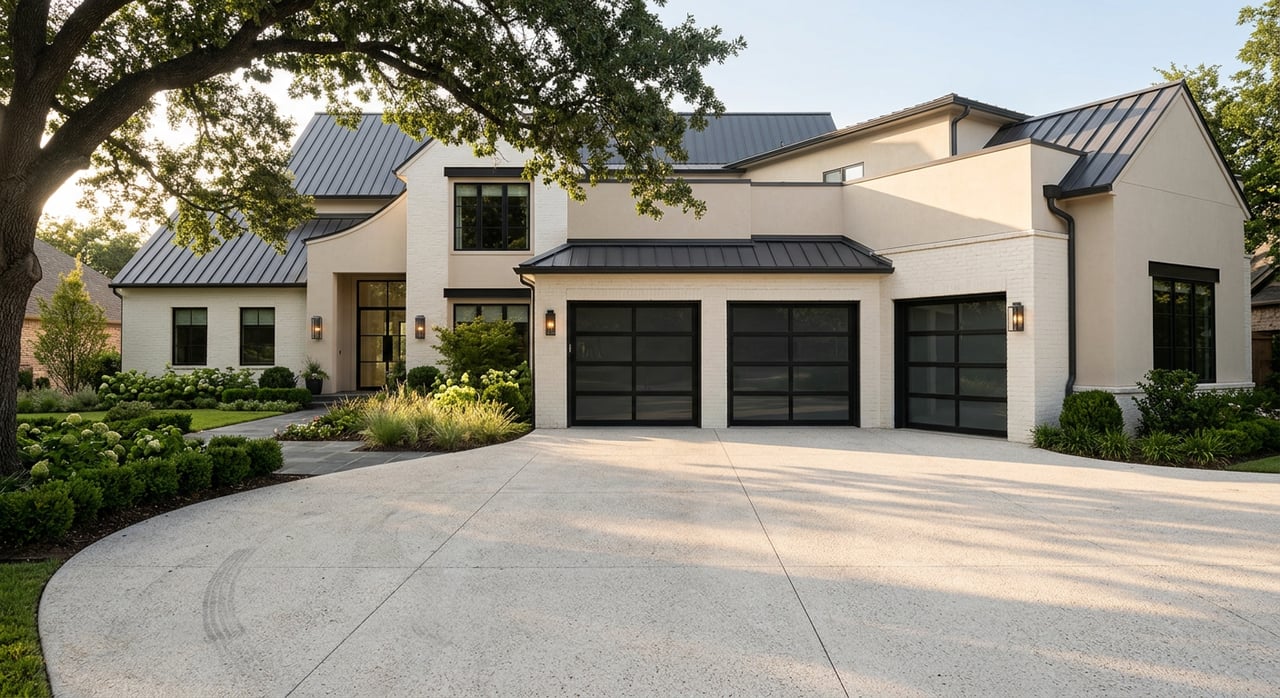
Design direction in the D.C. suburbs favors modernized traditional forms such as the modern farmhouse and transitional contemporary. These styles pair well with open entertaining plans, expansive glazing, and indoor-outdoor flow. For background on why these forms have surged, see this regional design piece on their popularity and buyer appeal (Washingtonian on modern farmhouses).
Amenities that resonate in Potomac’s luxury tier include:
- Open great rooms anchored by high-end kitchens
- Large primary suites with spa baths and custom closets
- Seamless indoor-outdoor living with covered terraces and outdoor kitchens
- Dedicated office and hybrid-work zones
- Finished lower levels with entertainment, fitness, and wellness spaces
- Smart-home systems, EV infrastructure, and strong energy performance
Outdoor living is especially influential in buyer interest and presentation, and it often supports stronger offers when staged and executed well (guidance on outdoor appeal). At the very high end, many buyers still prefer move-in ready product, which is part of why some large estates are evaluated as land-first opportunities for new builds rather than multi-year renovations (turnkey preference context).
Step-by-step: decide renovate vs. teardown
Clarify goals and timing. Do you want to maximize price, minimize time, or balance both? Your answer determines whether to target a builder sale, a retail listing with strategic updates, or a longer project.
Separate land and improvement value. Order a market appraisal and ask a trusted agent to benchmark the lot “as-is” against recent teardown land trades and new-build sales. Your floor value is often the land.
Run early feasibility. Engage a builder for high-level build-cost ranges and confirm utility, topography, and access realities. Ask about finish tiers so you can bracket costs.
Meet with the county early. A quick conversation or pre-application touchpoint with Montgomery County DPS can flag demolition triggers, sediment control thresholds, tree and stormwater requirements, and likely timelines (DPS demolition overview).
Build a conservative pro forma. Model both paths: targeted renovation vs. teardown and new build. Include hard costs, soft costs, holding costs, sales costs, and contingency.
Plan for community and environmental factors. If your lot is near sensitive corridors or large trees, budget for mitigation and potential public comment. Review any Neighborhood Conservation District or historic-area considerations that could add time or design constraints (planning overview).
Choose the sale strategy. Options include marketing as a turn-key listing after strategic updates, selling as a lot to a builder for speed and certainty, or pursuing a builder partnership if you want to share in end value.
How DMV Living Group helps
You deserve a clear, low-stress plan that protects your time, equity, and privacy. With a boutique model and founder-led accountability, we help you evaluate land value, map permit steps, and position your property for the right buyers at the right moment. Our curated partner network supports you from valuation through close so you can move forward with confidence.
Here is how we guide you:
- Data-driven pricing and lot valuation that separates land and improvement value
- Targeted pre-list recommendations to maximize return with minimal disruption
- Builder-market outreach for as-is or lot sales when speed is the priority
- Concierge coordination with vetted builders, designers, and permit consultants
- Discreet marketing and negotiation designed for high-stakes, luxury outcomes
If you want a calm, structured path through a complex decision, we are here to help you compare scenarios and choose the best one for your goals.
Ready to assess your options in Potomac or nearby Montgomery County communities? Connect with Jared Russell for a complimentary, data-driven consultation.
FAQs
What permits do I need to demolish a house in Montgomery County?
- You need a residential demolition permit, which has a 10-day notification period and may be accompanied by sediment control, grading, stormwater, and Right-of-Way approvals depending on site disturbance (county overview).
How long does a Potomac teardown typically take from purchase to move-in?
- Timelines vary by scope, but many projects include 2 to 8 weeks for demolition permitting plus 10-day notice, additional weeks or months for stormwater or grading if triggered, design and selections, and a construction window often measured in many months for custom homes.
How do I estimate my land value versus the house value in Potomac?
- Start with a market appraisal, then benchmark against recent teardown land trades and completed new-build sales nearby; your agent can model both a lot-only sale and a renovated or new-build end value to show the likely net.
Are there special constraints near the Potomac River or C&O Canal?
- Yes, lots in these areas can involve additional tree conservation, slope, and riparian-buffer considerations, and sometimes greater public scrutiny, which can affect design and timelines (planning guidance).
What features do luxury buyers in Potomac expect in new builds?
- Open plans, high-end kitchens, large primary suites, indoor-outdoor living spaces, office zones, wellness areas, smart-home tech, EV readiness, and strong energy performance are common expectations; modernized traditional styles remain popular (design context).
When does renovation make more sense than a teardown?
- Renovation can win when the structure is sound, the floor plan can be adapted to today’s living, and your neighborhood does not consistently support $400-plus per square foot for new builds, or when overlays and conservation rules would significantly limit a replacement home.